Reheating Coffee with Milk: Is It Safe and How To Do It Right
Life happens, and sometimes that perfectly brewed cup of coffee with milk gets cold before you can finish it. The question then arises: can you reheat coffee with milk? The answer isn’t a simple yes or no. Reheating coffee with milk is possible, but there are crucial factors to consider to ensure both food safety and optimal flavor.

Understanding the Risks and Benefits of Reheating Coffee with Milk
The delicious combination of coffee and milk is a morning staple for many. From creamy lattes to a simple splash of milk in your drip coffee, this pairing offers a delightful balance of robust coffee flavor and smooth, creamy texture. However, when that delightful beverage cools down, the urge to reheat it is understandable.
Reheating coffee with milk presents both opportunities and challenges. On one hand, it allows you to salvage a perfectly good drink and avoid wasting it. On the other hand, milk is a perishable ingredient, and improper reheating can lead to bacterial growth and potential health risks. Additionally, the flavor of the coffee and the texture of the milk can be affected by the reheating process.
Therefore, understanding the guidelines for safe reheating is paramount. These guidelines primarily revolve around time and temperature control. The key is to minimize the time that the coffee with milk spends at room temperature, which is the “danger zone” for bacterial growth.
When Can You Safely Reheat Coffee with Milk?
The general rule of thumb is that coffee with milk can be safely reheated if it has been refrigerated promptly after brewing or has only been left at room temperature for a short period, ideally less than two hours. This two-hour window is crucial because it minimizes the opportunity for harmful bacteria to multiply to dangerous levels.
If your coffee with milk has been sitting at room temperature for longer than two hours, it’s best to err on the side of caution and discard it. Consuming milk that has been left out too long can lead to foodborne illness, which is definitely something you want to avoid.
Even within the two-hour window, proper storage plays a vital role. If you know you won’t be finishing your coffee immediately, refrigerate it as soon as possible to slow down bacterial growth and preserve its freshness.
Which Coffee and Milk Drinks Reheat Best?

Not all coffee and milk drinks are created equal when it comes to reheating. Certain types of beverages tend to reheat better than others, maintaining their flavor and texture more effectively.
Coffee with milk or cream that has not been frothed is generally the easiest to reheat. The absence of foam simplifies the process and reduces the risk of textural changes. Lattes without foam, for instance, typically reheat well.
However, drinks with foamed milk, such as cappuccinos, can present challenges. The foam tends to collapse and become clumpy upon cooling, and reheating doesn’t always restore its original texture. While it’s still possible to reheat these drinks, the results might not be as satisfying.
Good news for those who prefer non-dairy alternatives: Non-dairy milk generally behaves similarly to cow’s milk when reheated. Coffee mixed with almond milk, soy milk, oat milk, or other non-dairy options can be reheated without significant issues, as long as the two-hour room temperature rule is followed.
Here are a few examples of coffee and milk combinations that reheat well:
- Brewed coffee with cream (especially if refrigerated promptly)
- Americano with a splash of milk
- Brewed coffee with non-dairy milk
Step-by-Step Guide: How to Reheat Coffee with Milk Properly
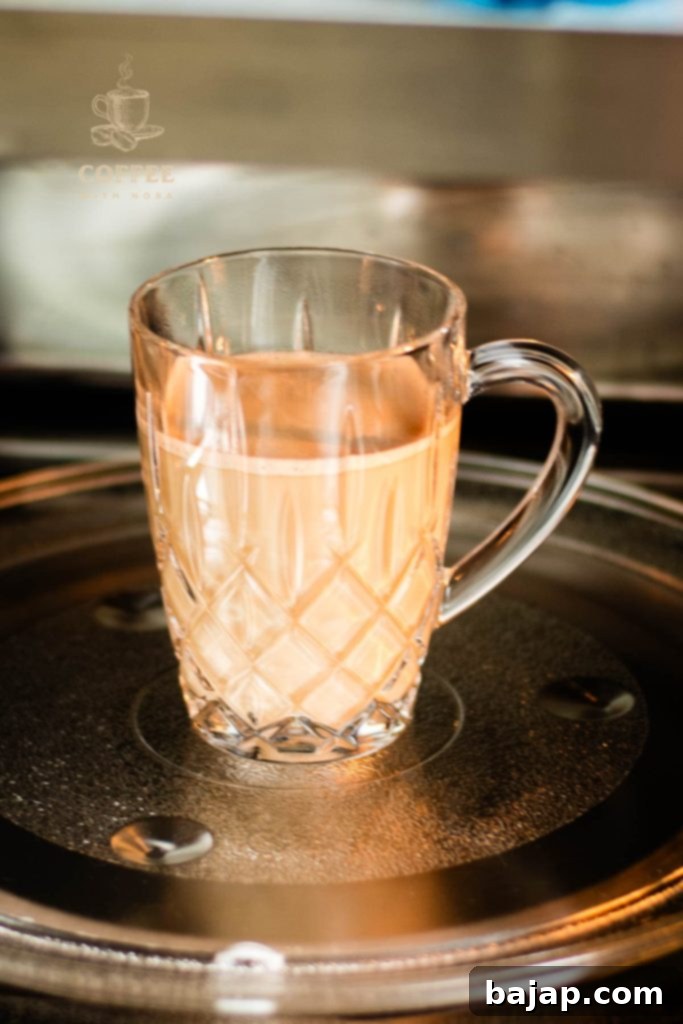
Once you’ve determined that your coffee with milk is safe to reheat, the next step is to choose the right method. Two popular options are microwaving and stovetop heating. Both can effectively warm your beverage, but each has its own advantages and disadvantages.
Reheating in the Microwave
Microwaving is a quick and convenient method, especially when you’re short on time. Here’s how to do it properly:
- Ensure the coffee with milk is either freshly brewed (less than two hours old) or has been refrigerated.
- Pour the coffee into a microwave-safe mug or container.
- Heat on the standard setting for approximately one minute.
- Exercise caution when removing the coffee from the microwave, as it can heat unevenly and become scalding hot.
- If the coffee isn’t warm enough after one minute, return it to the microwave and heat in short bursts (15-20 seconds) until it reaches your desired temperature.
Reheating on the Stovetop
Stovetop heating offers more control over the reheating process and can sometimes yield better flavor results. Here’s how to do it:
- Start with fresh or chilled coffee with milk.
- Pour the coffee into a saucepan and place it on the stovetop over medium-low heat.
- Heat the coffee, stirring frequently, until it’s warm throughout.
- Be careful not to overheat the mixture, as this can cause the milk to curdle. Maintaining a low and slow heating process is crucial for optimal results.
Frequently Asked Questions About Reheating Coffee with Milk
Yes, you can heat cold-brewed coffee with milk. Although cold brew is traditionally made without heat, you can safely use the microwave or stovetop methods described above to warm it up with milk.
Iced coffee, which is typically brewed hot and then chilled, can technically be reheated. However, the addition of ice can dilute the coffee, resulting in a watery and less flavorful reheated beverage. The experience may not be as enjoyable.
Yes, you can reheat cold brew coffee by itself or with milk. Reheating might subtly alter the original flavor profile, but slow and gentle heating is recommended to avoid any undesirable taste changes. Some people prefer to dilute it with hot water before reheating to customize the flavor.
Yes, if you don’t follow proper food safety practices. Milk is perishable, and bacteria can grow if it’s left at room temperature for too long. Always refrigerate your coffee with milk promptly (within two hours of brewing) and only reheat it if it has been stored properly.
A high-quality coffee tumbler can help maintain your coffee’s temperature for an extended period. Depending on the brand and design, a good tumbler can keep your coffee hot for one to two hours longer than an uninsulated mug. This gives you a bit more time before you need to drink or refrigerate it. However, always refer to the manufacturer’s guidelines for your specific tumbler, and when in doubt, stick to the two-hour rule.
Explore More Coffee Tips and Recipes
- Can you Put Hot Coffee in Glass?
- Why does Oat Milk Separate in Coffee?
- How to Froth Milk Without a Frother?
- How much Syrup to Put Into Coffee?
- How to Make Homemade Creamer?
- Can you Whip Coffee Creamer?
- Brown Sugar in Coffee
- How to Make Coffee con Leche?
- Lavender Latte
- Iced Lavender Latte
- Iced Honey Latte
- Honey Lavender Oat Milk Latte
- Honey Latte
- Pumpkin Spice Latte